
Kathmandu University launches new course on deafblindness
10 August 2026
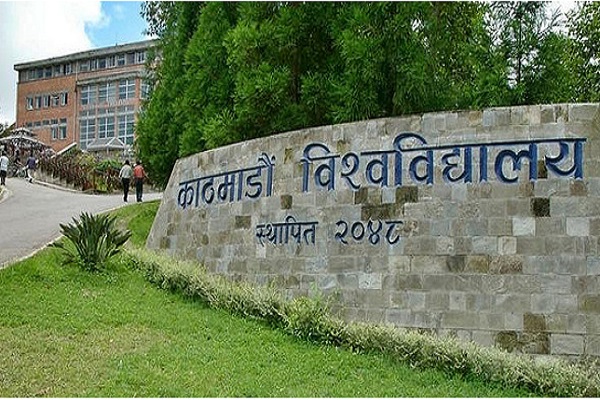
Nepal’s first ever university course focused on deafblindness has launched at Kathmandu University.
Fifteen students are now enrolled on the course, ‘Understanding Deafblindness’, which began in June 2026 and is available to students attending the University’s School of Education.
The launch is a historic first for awareness and education in deafblindness in Nepal, and one of only a few of its kind around the world. Following years of campaigning and development by the National Federation of the Deaf Nepal (NDFN), Sense International’s partner organisation in the country, its launch recognises the need to accomodate deafblindness as a distinct disability. By training future educators and policymakers to understand and address the specific needs of people with deafblindness in learning environments, this small step has the power to transform inclusion in Nepal’s education system.
The launch of the course follows a long consultation with the community to understand the gaps in existing education provision and what was needed to fill them. Kathmandu University’s Continuing and Professional Education Centre had recently begun building specific short courses base on community needs, such as autism and Down’s Syndrome in education, working directly with organisations with expertise to fill gaps in knowledge. Following a workshop in February 2026 with educators, parents, community members and disability practitioners, the call for specialist education in deafblindness was clear. NDFN worked alongside the Centre to develop the course programme, with the first intake ready to attend earlier this year.
The first module of the course focuses on foundational understandings; the distinct experience of combined sight and hearing impairments, what daily life looks like, and the legal frameworks for the rights of people with deafblindness in Nepal and internationally. This is followed by two further modules focused on identifying and supporting people with deafblindness – understanding the barriers people with deafblindness may face, learning different communication methods, and practising screening and assessment methods – and teaching and supporting learners with deafblindness – practical classroom skills, adapting learning materials, and Individualised Education Plans. Finally, each student will gain a week of hands-on experience, visiting schools, resource centres, and rehabilitation programmes, connecting their learnings to lived experience and meeting children with deafblindness and their families.
The course has seen encouraging interest and participation from the first cohort, currently taking place online ahead of planned in-person meetings and trainings later in the term. By persisting in their quest to build inclusion into education in Nepal, NDFN have shown what can happen when institutions like Kathmandu University listen to the needs of their communities, taking note of gaps in systems that leave groups behind and working to fulfil them so that every can access their right to education and provision. It is encouraging to see institutions to listen to their communities in this way, taking steps towards a world where every person’s needs are met with inclusion.